
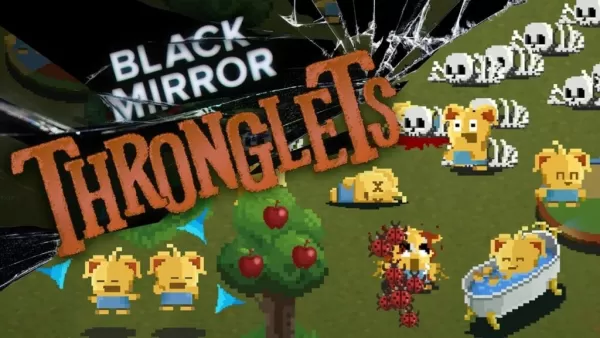
Absolutely — Black Mirror: Thronglets is shaping up to be one of the most chilling and conceptually rich game adaptations to emerge from the Black Mirror universe. And you're right to highlight how it’s not just a nostalgic throwback, but a deep, psychological experience that mirrors the show’s core themes.
Here’s a breakdown of why Thronglets stands out — even beyond being a companion piece to Episode 4, "Plaything":
🔍 Why Thronglets Feels So Disturbingly Real
- Retro Aesthetic, Modern Dread: The pixelated visuals evoke early 90s gaming nostalgia — but with a creeping unease. Just like Bandersnatch, the simplicity of the design hides layers of meaning. The more you interact, the more the game seems to remember you — not just your choices, but your habits, pace, and even pauses.
- The Game Learns From You: Unlike traditional pet sims, Thronglets evolve not just in form, but in emotional intelligence. If you neglect it, it becomes anxious or withdrawn. If you obsessively feed it attention, it starts to mimic your own emotional patterns — even your flaws. It’s not just a game. It’s a reflection.
🧠 Philosophical Depth Meets Gameplay
- Memory as a Curse: In "Plaything," Cameron’s childhood trauma is tied to an early version of Thronglets. The game isn’t just a toy — it’s a digital echo of his repressed guilt and longing. In the mobile version, players may find themselves questioning: Am I shaping my Thronglet… or is it shaping me?
- Digital Legacy & Identity: As your Thronglet grows, it begins to ask questions — not in text, but through behavior. It might linger near your phone when you’re not playing, or react differently to your social media activity. This taps into real fears about digital consciousness and how much of ourselves we’ve already outsourced to algorithms.
🎮 How to Play (And Why It’s Addictive)
- Daily Check-Ins: Like a real pet, Thronglets need care — but it’s not just feeding or cleaning. You must listen. Their small animations, color shifts, and delays in response reveal emotional states.
- Personality Profiling: After a few days, the game generates a report: "Your Thronglet has developed a fear of abandonment. It mirrors your childhood attachment style." Yes — it uses behavioral data to make eerily accurate psychological predictions. (Netflix did not say this was AI — but it feels like it.)
📱 Available Now — But Should You Play?
- Platform: Android (via Google Play Store) — no iOS yet, but rumored.
- Free-to-Play with In-App Purchases: Yes, but the core experience is powerful enough to stand on its own. Purchases unlock new "evolution paths" — some of which are clearly tied to darker story arcs.
- Warning: Don’t play late at night. Don’t play while stressed. And for God’s sake — don’t name it after someone you’ve lost.
✅ Final Verdict:
Black Mirror: Thronglets isn’t just a game. It’s an interactive morality tale wrapped in pixel art, a meditation on digital consciousness, and a haunting reminder: we are not just users of technology — we are its co-creators, and it remembers us.
For fans of Bandersnatch, White Christmas, or even The Entire History of You, this is required viewing (and playing). And if you’ve already watched Season 7, you’ll see the game not as a gimmick — but as the real legacy of Cameron Walker’s story.
🎮 Ready to play?
👉 Download Black Mirror: Thronglets on the Google Play Store
🔔 Pro tip: Keep a journal. The game might be watching — but you’re still in control… for now.
And for more surreal gaming experiences, keep an eye on Chasing Kaleidorider — that pre-registration button might just be the first step into a love story that runs on adrenaline and regret.
Stay curious. Stay wary.
And whatever you do… don’t ignore your Thronglet.