


Kaiber
Catégorie : Conception d'artVersion: 2.2.3
Taille:18.55MSystème d'exploitation : Android 5.0 or later
Promoteur:Kaiber
 Télécharger
 Kaiber : outils de création d'IA spécialement conçus pour les artistes afin d'assister plutôt que de remplacer la création
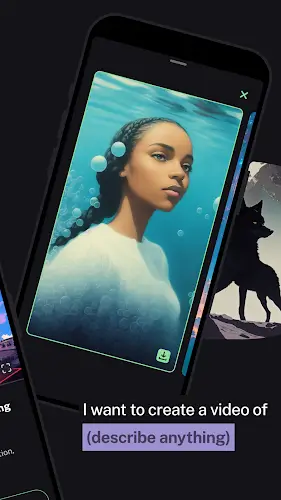
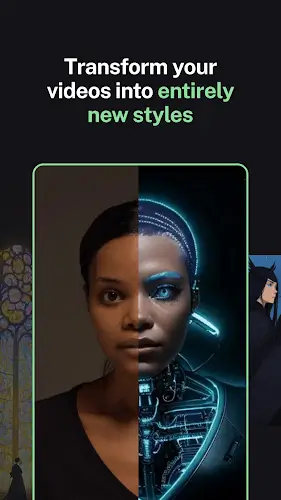
Kaiber est un outil de création d'IA innovant dont l'objectif principal est d'inspirer la créativité des artistes grâce à des capacités audio et vidéo génératives. Il n'est pas destiné à remplacer la création artistique, mais s'engage à améliorer et à élargir les capacités créatives des artistes, en mettant l'accent sur la relation de collaboration entre les artistes et la technologie. Kaiber Positionné comme un « laboratoire créatif d'IA construit par des artistes », il a pour objectif d'aider les artistes à dépasser les frontières de l'imaginaire. Cet article vous présentera Kaiber et son lien de téléchargement gratuit en détail.
Conçu pour les artistes
Le concept central deKaiber est une compréhension approfondie du processus de création artistique. Il se présente comme « construit par des artistes pour des artistes », se positionnant comme un produit collaboratif au sein de la communauté créative. Cela montre que Kaiber est plus qu'un simple outil, mais un partenaire créatif pour les artistes, dont le processus de développement intègre une compréhension profonde des nuances de la création artistique. Ce lien étroit avec le monde de l’art garantit une expérience plus authentique et conviviale, différenciant Kaiber des autres outils de création.
Inspirez la créativité, pas copier ou remplacer
KaiberDédié à « inspirer la créativité, pas à copier », cela incarne pleinement sa vision. À une époque où l’IA est souvent considérée comme une menace pour les processus créatifs traditionnels, Kaiber adopte une position rafraîchissante. Il se positionne comme un catalyseur de créativité, offrant aux artistes des moyens d'explorer de nouvelles dimensions, plutôt que de remplacer la création manuelle. Cette approche promeut une relation symbiotique entre l’artiste et la machine, mettant l’accent sur l’amélioration plutôt que sur le remplacement des capacités artistiques.
Explorez l'intersection de l'art et de la technologie
KaiberL’exploration audacieuse de « l’intersection de l’art et de la technologie » reflète son engagement à combler le fossé entre l’expression artistique traditionnelle et les avancées technologiques de pointe. L'application introduit des capacités audio et vidéo génératives, offrant aux artistes un espace créatif plein de possibilités infinies. Cette intersection constitue un terrain fertile pour l'expérimentation créative, permettant aux utilisateurs d'explorer des territoires inexplorés et de découvrir de nouvelles formes d'expression.
Redéfinir la vision créative
La promesse de « possibilités infinies » est une perspective séduisante pour tout artiste, et Kaiber semble déterminé à tenir cette promesse. En exploitant la puissance de l’intelligence artificielle pour l’audio et la vidéo génératives, l’application ouvre des voies jamais explorées auparavant. Les artistes peuvent plonger dans de nouveaux territoires créatifs, s'affranchir des contraintes de la tradition et découvrir des approches uniques de leur métier. Cet élément d'exploration se positionne Kaiber non seulement comme un outil de création, mais comme un outil de découverte artistique.
Dans l'ensemble, Kaiber est un outil créatif basé sur l'IA conçu pour responsabiliser et inspirer les artistes. L'accent mis sur la collaboration, l'exploration de l'intersection de l'art et de la technologie et l'accent mis sur l'audio et la vidéo génératifs en font un outil idéal pour les artistes cherchant à repousser les limites de l'expression créative.






Harukanaru Toki no Naka de: Ryuuguu no Miko arrive sur iOS et Android cet hiver

Le Steelbook 4K de The Thunderbolts* est enfin disponible en précommande, avec les deux titres
- Hoora transforme le jeu mobile en un défilement à la TikTok de minijeux sans fin il y a 5 jours
- Duet Night Abyss : le jeu de gacha qui coupe les coûts et booste joueurs et développeurs Il y a 1 semaines
- Pedro Pascal reconnaît la controverse des fans concernant le casting de Reed Richards Il y a 1 semaines
- Les préinscriptions à la mise à jour d'anniversaire de Brown Dust 2 sont ouvertes Il y a 1 semaines
- Play Together dévoile un immense parc à thème dinosaures ! Il y a 1 semaines
- A Little to the Left lance les extensions Cupboards & Drawers et Seeing Stars Il y a 1 semaines
- Monster Train est maintenant disponible sur Android Il y a 1 semaines
- Invasion mignonne : tuer avec douceur dans l'Alpha régional Il y a 1 semaines
- La bande-annonce n°2 de GTA 6 capturée sur une PS5 de base et contenant du gameplay Il y a 1 semaines
-

La vie à la mode / 24.4.1 / by Calisteniapp, S.L. / 69.34M
Télécharger -

Bureaux commerciaux / v1.0 / by xifa console / 2.95M
Télécharger -

La vie à la mode / 0.105 / by Veicoli Srl / 4.80M
Télécharger -

Outils / v1.1.9 / by nikiisoku / 141.53M
Télécharger -

Personnalisation / 1.3.2 / 229.15M
Télécharger -

Outils / 2.2.8 / by Gspace Team / 15 MB
Télécharger -

Communications / 2.0.0.24 / 59.72M
Télécharger -

La vie à la mode / v1.0 / by MNA Team / 264.80M
Télécharger
-
 Les 10 meilleures équipes de Marvel Strike Force (2025)
-
 Square Enix crée une nouvelle politique pour protéger les employés des fans toxiques
-
 Célébrez le 7e anniversaire: Résolvez le mystère de Harry Potter: Poudlard Mystery!
-
 Comment réparer les concurrents de Marvel en compilant les shaders lent au lancement
-
 Il semble que nous puissions oublier les scènes de sexe explicites à Inzoi
-
 "ESO Expansions & DLC: Guide complet de commande"